

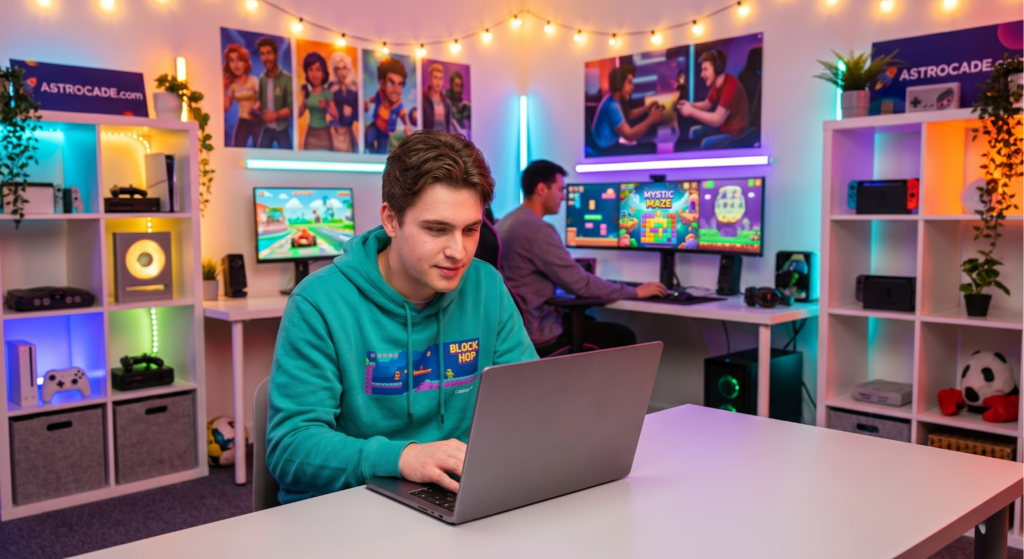
Casual games are winning more attention in 2026 because players want fun that fits real life. Big AAA titles still have huge budgets, detailed worlds, and loyal fans, but many players no longer want every session to feel like a major commitment. They want quick access, short rounds, simple controls, and clear goals they can enjoy without spending hours learning systems. Mobile gaming is also still a major part of the industry, with one 2026 market report projecting the global mobile gaming market at $137.46 billion in 2026.On Astrocade, that shift makes sense because players want fast play, easy discovery, and experiences that feel rewarding from the first minute.
Why Casual games fit how people play in 2026
Casual games fit daily life because they do not demand too much from the player. You can enjoy them during a break, while waiting, after work, or between tasks. You do not need a long setup. You do not need to learn complex systems before the first move. You can start, understand the goal, and enjoy a small win or challenge quickly.
That is a big difference from many AAA titles. Large games can be amazing, but they often need time, focus, updates, storage space, and sometimes expensive hardware. Many players still love that depth, but not every day. Some days, a simple five-minute session feels better than a two-hour mission. Casual play gives players control over their time, and that control matters.
Players want less pressure and faster fun
A major reason casual play is growing is that players want less pressure. Not every session needs rankings, long quests, complex builds, or serious competition. Sometimes people only want to relax, reset their mind, or enjoy something simple after a busy day.
The best Online Free Games usually offer:
- Fast access without heavy setup
- Simple controls that feel clear right away
- Short sessions that still feel complete
- A goal players can understand quickly
- Fair challenge without too much stress
- Quick replay after mistakes
- Feedback after every key action
- Progress that feels easy to notice
- A fun loop that works in small breaks
- A reason to try one more round
AAA titles are bigger, but bigger is not always better
AAA titles often bring huge worlds, cinematic stories, detailed graphics, and deep systems. That can be exciting when players have enough time and energy. But bigger games can also feel tiring. Long tutorials, large updates, complex menus, and big time commitments can make players hesitate before opening them.
Casual play feels lighter. The player does not need to plan the whole evening around one title. A short session can still feel satisfying if the game has a clear loop. Aim and score. Drive and avoid. Match and clear. Serve and upgrade. Survive and improve. Simple loops can be powerful because they get to the fun quickly.
About Highway Drive 3D
Highway Drive 3D is a driving game where the player controls a car on highways, avoids traffic, and tries to survive as long as possible at high speed. The experience fits casual play because the goal is clear from the start: stay on the road, react to traffic, keep control, and last longer with each attempt. Players can enjoy quick driving sessions, learn from close crashes, improve timing, and replay runs to reach better distances or stronger scores.
Why Online Games are easier to fit into a busy day
Online Games work well for busy players because they can be opened quickly and played in short sessions. Many people do not have the same free time every day. Work, school, family, travel, and daily tasks can make long gaming sessions harder to plan. A quick online experience can fit into smaller spaces.
BCG’s video gaming report for 2026 also points to adults staying engaged with games later in life, with many older players spending several hours per week playing.That matters because adult players often need flexible entertainment. They may enjoy deep games on weekends, but casual online play often fits weekdays better.
The rise of phone-friendly play
Phones changed what players expect from gaming. A phone is always nearby, and that makes short play feel natural. Players can open a quick title while waiting in line, sitting in a car, or relaxing for a few minutes. Casual play works well on phones because controls are often simple and sessions do not need to last long.
This does not mean players only want tiny experiences. It means they want options. A phone-friendly game can still test timing, focus, planning, memory, aim, or reactions. The best casual phone sessions feel easy to enter but still give players room to improve.
Online game No Download access makes casual play stronger
Online game No Download play is one of the biggest reasons casual experiences feel so convenient. Downloads take time. Updates can interrupt a session. Storage limits can stop players from trying something new. No-download access removes those barriers and lets players focus on the actual fun.
This is important because casual play often starts from a small moment of interest. A player sees a title, opens it, and tries the first round. If the game asks for too many steps first, that interest can fade. The shorter the path from curiosity to play, the stronger the experience feels.
Why casual play feels better for quick rewards
Players enjoy quick rewards because they make progress easy to feel. A reward can be a score, a cleared level, a clean run, a better time, a survived wave, or a small upgrade. The reward does not need to be huge. It only needs to show the player that their action mattered.
AAA games often use large reward systems, but casual titles can deliver faster feedback. You know right away if your move worked. You see the result quickly. You understand why you failed or improved. That fast loop keeps the player engaged without asking for a long commitment.
How a social gaming platform changes discovery
A social gaming platform helps casual players find fun faster. Instead of searching across random sites or installing different apps, players can explore many styles in one place. This makes discovery easier and more relaxed. You can try a racing challenge, then switch to a puzzle, then play a quick sports title, all without turning the session into work.
Discovery matters because mood changes. One day you may want pressure. Another day you may want calm. Another day you may want something funny to share. A strong platform gives players choices without slowing them down. That makes casual play feel more personal and flexible.
Why players like simple competition
Casual play does not mean players hate competition. They often enjoy it more when it feels friendly and easy to understand. A simple score challenge can be more fun than a complex ranked match. A short race can feel more exciting than a long tournament when time is limited.
Simple competition also works well with friends. A player can share a result and invite someone else to beat it. The challenge is clear, and the pressure stays light. This style is one reason many people like to play with friends online without needing a full multiplayer setup every time.
Why AI games are adding fresh variety
AI games can add new ideas, changing patterns, and more flexible challenges to casual play. Players like variety, especially when a session is short. If each round feels a little different while the goal stays clear, the game becomes easier to replay.
The key is clarity. A fresh idea should not confuse the player. Casual players still want to know what they control, what the goal is, and why they failed or succeeded. AI can make play feel fresher, but the core experience must stay simple and fair. When that balance works, casual titles can feel new without becoming stressful.
Casual games are easier to share
Casual titles are often easier to share because the hook is simple. A friend does not need a long explanation before trying. You can say, “beat my score,” “avoid the traffic,” “clear the level,” or “survive longer,” and the idea makes sense.
This is one reason Viral games often come from simple formats. The easier the challenge is to understand, the easier it is to spread. A funny fail, close call, hard level, or high score can move quickly through friend groups and social feeds. Simple games travel fast because people can understand the fun before they even play.
AAA fatigue is real for some players
Some players feel tired of massive games that demand too much time, money, and attention. Prices, hardware expectations, large downloads, and long update cycles can make AAA play feel heavier. This does not mean players are rejecting high-quality games. It means many players are becoming more selective.
Sensor Tower’s 2026 gaming report notes that friend-group and creator-driven experiences rose strongly in 2025, with titles like R.E.P.O. and PEAK performing well on PC and console compared with major AAA releases.That shows players are open to lighter, social, and more flexible experiences when the fun is clear.
Casual play is not only for beginners
A common mistake is thinking casual titles are only for beginners. Many experienced players also enjoy them. They may play a deep RPG or shooter at night, then open a short puzzle or racing challenge during the day. Casual play is not a lower form of gaming. It is a different mood.
A strong casual title can still reward skill. Better timing, sharper reactions, smarter choices, and cleaner movement all matter. The difference is that the first step feels easy. Players can start without pressure, then improve if they want. That makes the genre useful for both new and experienced players.
Why casual games keep players returning
Casual titles keep players returning because they fit small habits. A player may not have time for a big session, but they can still play one round. Over time, those short sessions build loyalty. The game becomes part of a routine.
Good replay value also helps. Players return when they believe they can do better. A higher score, longer run, cleaner move, or completed level gives them a reason to try again. The best casual experiences keep that reason clear. They make the next attempt feel possible.
What players should look for in 2026
Players should choose casual titles that respect their time. Fast access is important, but the game also needs strong design. The first minute should explain the goal. The controls should feel simple. Feedback should be clear. Failure should teach something useful. Replay should feel smooth.
Avoid titles that waste time before the fun begins. Avoid experiences with confusing goals or unfair results. A casual title should feel easy to start, not empty. It should give players a small, complete moment that feels worth their attention.
Final Thoughts
Casual play is growing in 2026 because it matches how many people live and play now. Players want faster access, lower pressure, short sessions, and fun that does not require a huge commitment every time. AAA titles still have their place, but they are no longer the only way players define great gaming.
Astrocade gives players a place to enjoy games that start quickly, feel clear, and fit real daily moments. The reason Casual games are so loved is simple: they respect time, reduce friction, and make fun easy to reach when players need it most.
