

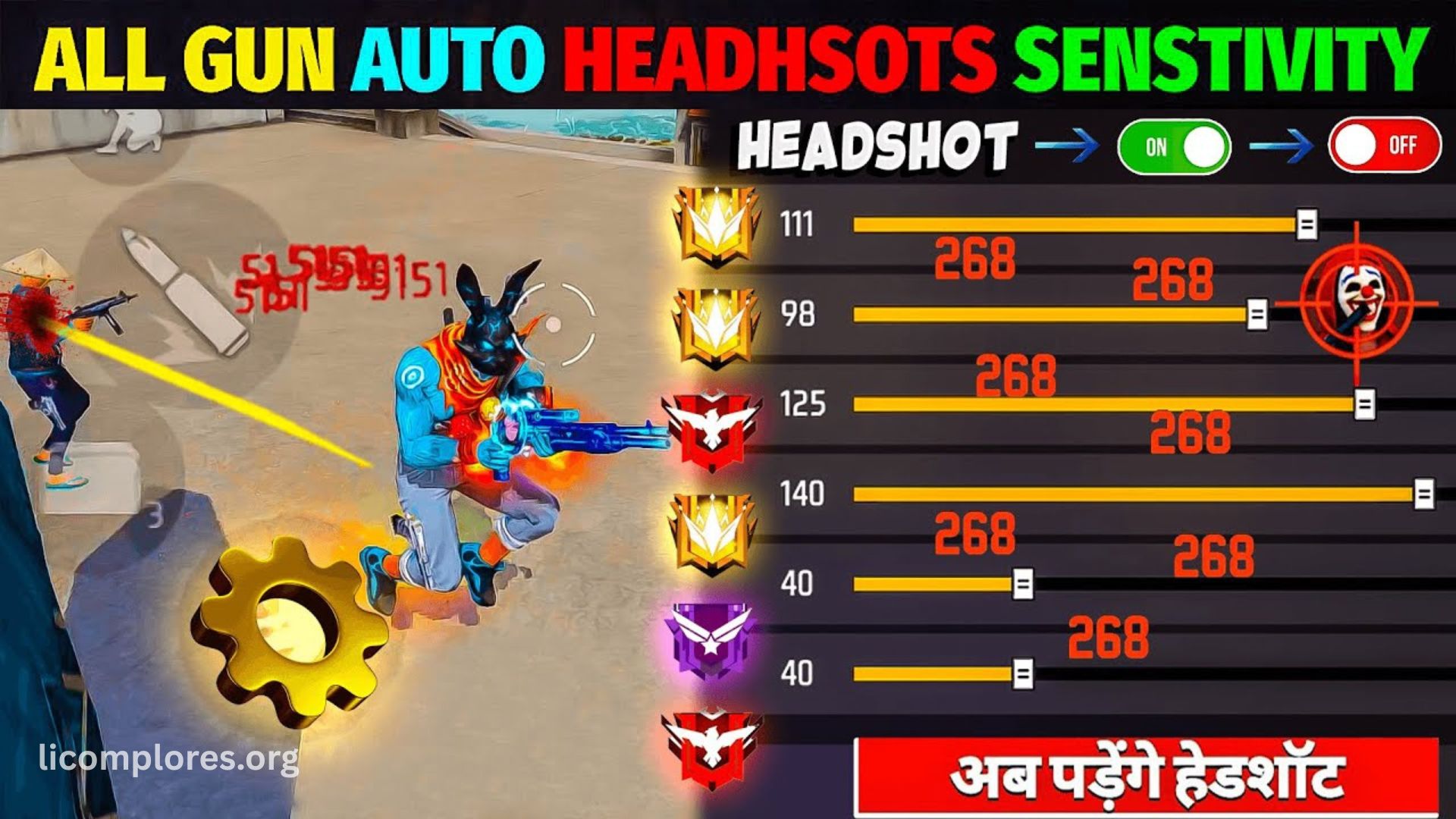
Free Fire sensitivity settings for headshots are one of the most important gameplay factors for players who want better aim accuracy and faster eliminations in Garena Free Fire. Sensitivity settings directly affect crosshair movement, drag speed, recoil control, and aiming precision during combat. Players who optimize their sensitivity correctly often perform better in close-range and mid-range gunfights because stable settings improve reaction speed and aiming consistency.
In 2026, competitive gameplay in Free Fire has become more advanced and skill-focused, making headshot accuracy a major advantage in ranked and esports matches. Professional players spend significant time adjusting sensitivity to match their device performance and personal playstyle. Correct settings help reduce aim instability while improving drag shots and recoil control. This guide explains how sensitivity works, the best settings for headshots, common mistakes players make, and how practice improves aiming performance over time.
Understanding Sensitivity in Free Fire
Sensitivity in Free Fire controls how quickly the screen responds to player touch movement while aiming and rotating. Different sensitivity categories affect different scopes and aiming mechanics, making proper adjustment important for stable gameplay. Higher sensitivity increases movement speed, while lower sensitivity improves control and precision.
Players who understand sensitivity mechanics can improve recoil handling and drag movement more effectively. Since every device responds differently, finding the right balance between speed and stability is necessary for accurate aiming and smoother gameplay performance.
Importance of Sensitivity for Headshots
Headshots are one of the fastest ways to eliminate enemies in Free Fire, especially during intense close-range fights. Sensitivity settings directly influence how smoothly players can drag their crosshair toward enemy heads. Incorrect settings often result in unstable movement or delayed aim adjustments.
Balanced sensitivity allows players to maintain smooth crosshair movement without losing control during fights. Proper settings improve drag accuracy, helping players achieve faster eliminations and better combat efficiency in ranked matches.
Best Sensitivity Settings for Headshots
- The best sensitivity settings for headshots focus on smooth drag movement and accurate crosshair control
- Balanced sensitivity helps players move aim quickly without excessive screen shaking
- Stable settings improve accuracy and aiming performance during fast gunfights
- General sensitivity and red dot scope settings are important for better headshot control
- Proper sensitivity adjustments help maintain consistent drag shots in different combat situations
Role of Device Performance in Sensitivity
Device performance has a major impact on how sensitivity settings behave in Free Fire. High-end devices usually provide smoother frame rates and faster touch response, while low-end devices may experience lag and delayed movement. These differences affect aiming stability during gameplay.
Players using low-end smartphones often need optimized sensitivity settings to compensate for hardware limitations. Lower graphics settings combined with balanced sensitivity can improve crosshair movement and reduce aim instability during fights.
Common Mistakes While Adjusting Sensitivity
- Many players copy professional sensitivity settings without testing them on their own devices
- Settings made for high-end smartphones may feel unstable on weaker devices
- Constantly changing sensitivity settings can reduce muscle memory and aiming consistency
- Players should practice regularly after adjusting sensitivity settings for better control
- Gradual sensitivity adjustments help improve stable aim and long-term gameplay performance
Importance of Practice for Better Headshots
Sensitivity settings alone cannot guarantee accurate headshots without consistent practice. Players need time to adapt to crosshair movement and develop muscle memory for drag shots and recoil control. Regular practice improves confidence and aiming consistency during real matches.
Training grounds and custom rooms are commonly used to test sensitivity adjustments safely before entering ranked gameplay. Practicing with the same settings repeatedly helps players improve reaction timing and overall combat efficiency.
Sensitivity and Different Weapon Types
Different weapon categories require slightly different sensitivity approaches for maximum efficiency. Shotguns often benefit from faster sensitivity because close-range drag shots require quick movement. Assault rifles usually need balanced settings for recoil control and sustained firing.
Sniper rifles and long-range weapons generally work better with lower sensitivity for stable aiming precision. Understanding weapon-specific adjustments helps players improve performance across different combat scenarios and game modes.
Future of Sensitivity Optimization in Free Fire
The future of sensitivity optimization in Free Fire is expected to become more advanced with adaptive controls and smarter customization systems. Developers continue improving aiming mechanics and device optimization to provide smoother gameplay across different smartphones.
Future updates may introduce AI-based sensitivity recommendations that automatically adjust settings according to player performance and device capability. These improvements could make gameplay more balanced and accessible for both beginners and competitive players.
Read More: Best Free Fire Sensitivity Settings Beginners Guide 2026
Frequently Asked Questions
Why are sensitivity settings important in Free Fire?
Sensitivity settings help improve aiming speed, recoil control, drag movement, and headshot accuracy.
What sensitivity is best for headshots?
Balanced high sensitivity is usually considered best for headshots because it allows smooth upward drag movement while maintaining stable crosshair control during fights.
Does sensitivity affect recoil control?
Yes, sensitivity directly affects recoil management and aiming stability. Proper settings help players control weapon spray more effectively during close-range and long-range battles.
Can low-end devices use high sensitivity?
Yes, low-end devices can use high sensitivity, but extremely high settings may create instability. Balanced sensitivity usually provides smoother gameplay and better control on weaker devices.
Should I copy pro player sensitivity settings?
No, players should avoid copying professional settings directly because every device has different touch response, frame rate, and performance capabilities.
How can I improve headshots in Free Fire?
Players can improve headshots by practicing drag shots regularly, using stable sensitivity settings, and spending time in training mode to build muscle memory.
Does graphics quality affect sensitivity performance?
Yes, graphics quality and frame stability affect sensitivity responsiveness. Low frame rates can create delayed movement and reduce aiming smoothness during gameplay.
Is practice important after changing sensitivity?
Yes, practice is extremely important after adjusting sensitivity because it helps players adapt to new controls, improve consistency, and develop better aiming accuracy over time.
Conclusion:
Free Fire sensitivity settings for headshots continue to play a major role in improving gameplay performance in Garena Free Fire. Proper sensitivity optimization helps players achieve smoother crosshair movement, better recoil control, and more accurate drag shots during combat. By understanding device compatibility, avoiding common mistakes, and practicing consistently, players can significantly improve their headshot accuracy and overall gameplay efficiency. As Free Fire continues evolving, sensitivity customization will remain essential for both casual players and competitive esports performance.
